

Scaling for growth without losing control
Published 17/05/2026
Growth is not the same as scaling.
A business can grow quickly without growing in a controlled way.
That is where problems often appear.
The company gets bigger, but the structure does not. The team expands, but the process stays the same. Revenue grows, but profitability does not. The founder works harder, but the business becomes less predictable.
That is not really scaling. That is just getting bigger without knowing why things are working, or why they are not.
Real scaling is different. It means building the structure, process, discipline and leadership rhythm needed to grow without creating chaos.
Growth without structure creates problems
When a business starts to scale, the founder's ability to be in every conversation, every decision and every customer relationship becomes impossible.
At some point, someone else has to own things.
That is where structure matters.
Without clear structure, growth becomes messy. Decision-making slows down. Quality becomes inconsistent. The team does not know what matters. The customer experience becomes unpredictable. Cash becomes harder to manage. And the founder becomes a bottleneck.
That does not always show up as a crisis. Often, it just shows up as exhaustion. The business is growing, but the founder is drowning. Revenue is going up, but margins are not. The team is bigger, but not more productive. More work is getting done, but less of it matters.
That is why scaling requires discipline.
People, process and structure
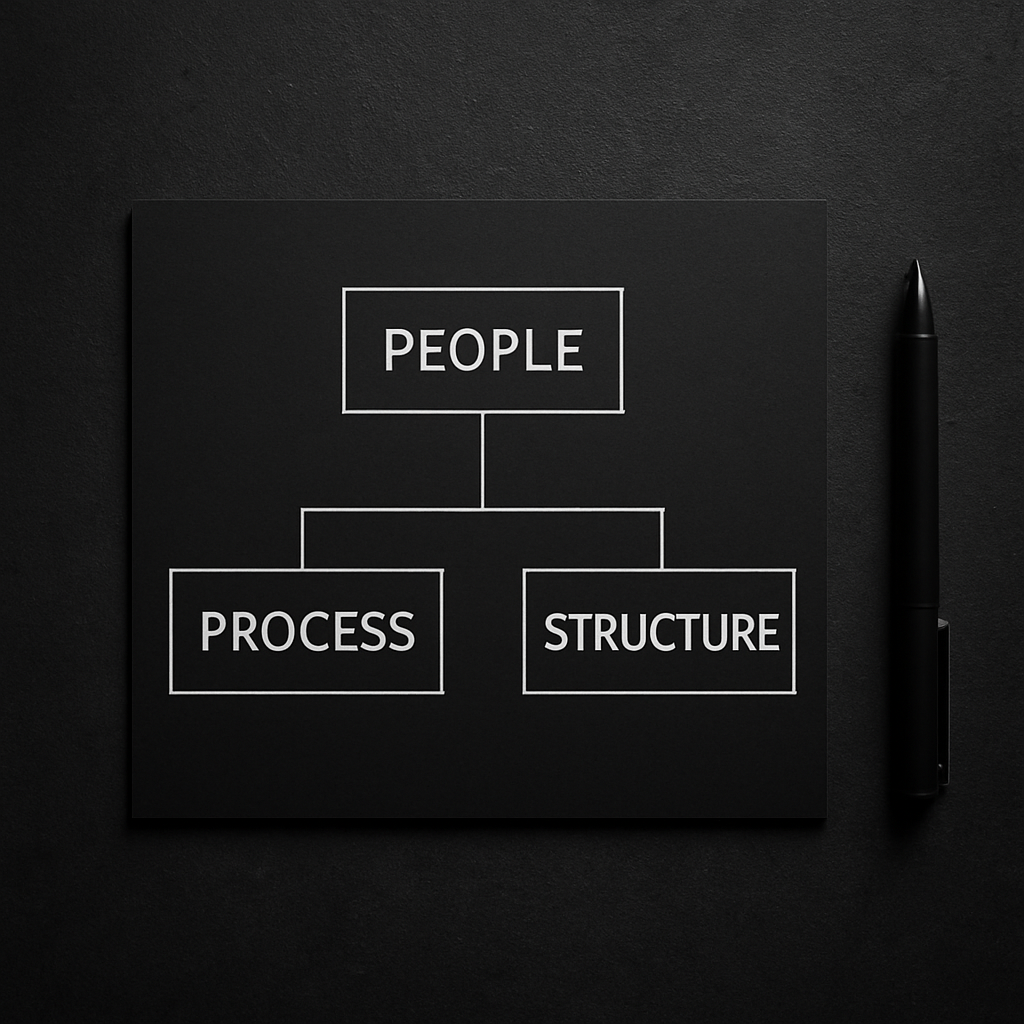
Sustainable scaling usually requires three things to evolve.
The first is people. As a business grows, the team needs to change. You need specialists, not generalists. You need managers, not just doers. You need people accountable for specific outcomes, not just people who are busy.
The second is process. What worked when it was just the founder and two people does not work when it is thirty people. Meetings, communication, decision-making, approvals, reporting and how work gets done all need to become more structured.
The third is structure. The business needs clarity on who owns what, who reports to whom, how decisions get made and where the real bottlenecks are.
None of that is exciting. But all of it matters.
Where structure often breaks down
For most founder-led businesses, structure breaks down in a few predictable places.
Sales. The founder has been the main salesperson. Growth means someone else needs to own revenue. That is harder than it sounds, because the founder usually does not fully hand it over. They stay too involved.
Operations. As the business grows, repeatable processes become critical. But if the founder built things by instinct, writing down the process feels like bureaucracy. It is not. It is clarity.
Leadership rhythm. In a smaller business, things happen informally. As you scale, you need meetings, reporting, reviews and clear communication. The founder often resists this because it feels like corporate nonsense. But it is actually how information flows.
Cash. Growth requires cash management. Many scaling businesses fail because they grow too fast for their cash position. That means understanding cash flow properly and making deliberate decisions about where to spend.
Scaling requires letting go
One of the hardest parts of scaling is the founder's willingness to let go.
Founders build businesses because they can do things well. They have high standards. They know what matters. They care about the details.
But that same strength becomes a problem at scale.
Because if the founder is still trying to do everything, or still trying to control everything, the business stops scaling. It just spends more money becoming bigger.
Real scaling means trusting people to own things. It means accepting that some things will be done differently than the founder would do them. It means creating clarity about what matters and then getting out of the way.
That is uncomfortable for most founders.
But it is necessary.
The businesses that scale well have three things
First, they have clear priorities. Not everything matters. Everyone in the business knows what the main levers are: what metric matters most, what the top three goals are, where the founder's attention is going.
Second, they have accountability. People own specific outcomes. They are not just busy. They are responsible for something. And that accountability is real.
Third, they have rhythm. Regular reviews, regular updates, regular check-ins, regular decisions. Not constant meetings, but enough structure that people know what is happening and where they fit.
Those three things create the space for sustainable growth.
Where I can help
My work with scaling businesses is usually about helping them strengthen the three things above.
Sometimes that means reviewing whether the team is structured in a way that supports growth. Sometimes it means clarifying priorities when too many things feel important. Sometimes it means building the financial discipline the business needs. Sometimes it means helping the founder let go of the things that are slowing the business down.
The work is not about turning a founder-led business into a corporate bureaucracy.
It is about building just enough structure for the business to grow without chaos.
Final thought
Growth without control is expensive.
It eats cash. It creates stress. It reduces quality. It confuses the team.
Real scaling is different. It is growth with discipline. It is building a business that can get bigger without the founder needing to do everything themselves.
That requires structure, clarity and the founder's willingness to let go of some control in order to create more growth.
That is what real scaling looks like.